
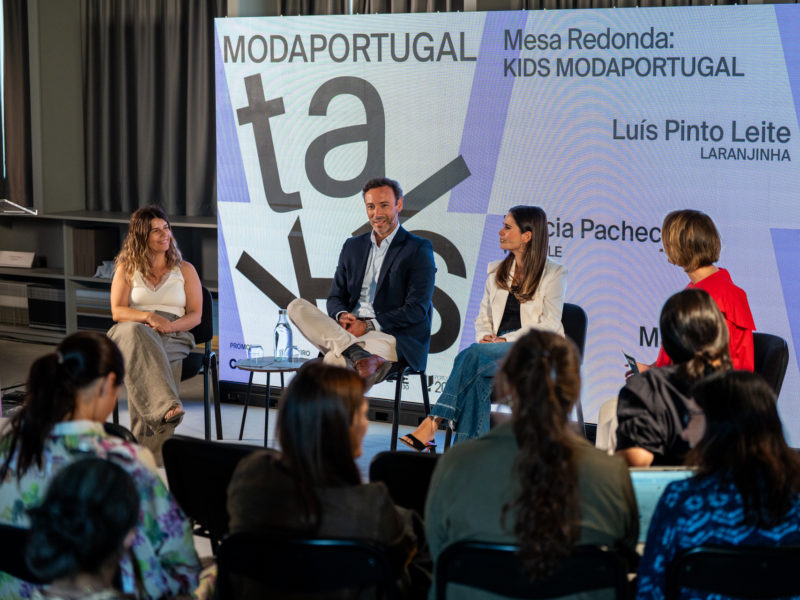
Portuguese origin is increasingly treated as part of what a brand stands for, not just a label on the garment. This was the common ground at a CENIT talk on Made in Portugal brands, which brought together children’s wear labels Laranjinha, Wedoble and Patachou, with contributions from Porto Business School and EY-Parthenon.
The brands described similar strengths: direct oversight of every stage of production, an industrial ecosystem built over decades, natural fibres and products designed to last. They also named the same weakness. Portugal is recognised for how well it manufactures, but it still has too few brands with the scale to carry that reputation abroad.
The speakers from academia and consulting took the argument further. Strong individual brands and the sector’s collective reputation reinforce each other. The Portuguese textile cluster has solid credentials in sustainability, speed of response and proximity to European customers, but it performs better than it communicates.
For Aferfi, the message is a familiar one: the value lies in the making, and it has to be told.
Source: Portugal Têxtil, “Made in Portugal diferencia marcas nacionais”, Carolina Bravo, 28 September 2026. Read the full article (in Portuguese)



